




Why Did Subaru Stop Making the Baja?
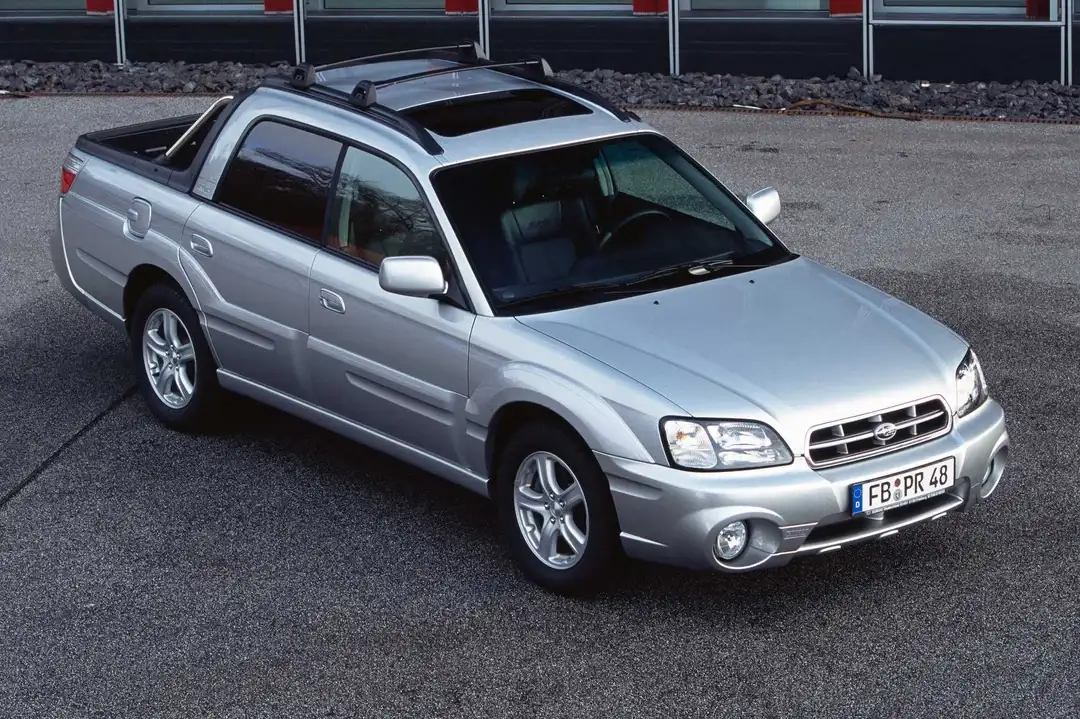
The Subaru Baja remains one of the most distinctive vehicles we’ve seen in Subaru’s history. This unique coupé utility blended car comfort with pickup versatility, creating something that had never been done quite that way before. Production lasted only four years (2003-2006), leaving many wondering what happened to this innovative vehicle.
At Sport Subaru South, we’re often asked about the Baja’s story and why Subaru discontinued this unconventional model. Understanding its brief but memorable run helps explain why it holds such a special place among enthusiasts today, even if it never achieved commercial success.
What Was the Subaru Baja?
The Subaru Baja defied easy categorization. Built on the Legacy/Outback platform, it combined sedan-like handling with an open cargo bed. Picture a four-door vehicle with the rear section replaced by a small pickup bed, complete with integrated tie-downs and plastic bed liner. That unconventional design set it apart from anything else on American roads.
This wasn’t a traditional truck. The Baja featured Subaru’s Symmetrical All-Wheel Drive, boxer engine, and unibody construction. Its most innovative feature was the “Switchback” system, where the rear seats and bulkhead folded flat, extending the four-foot bed into the cabin for nearly 7.5 feet of cargo length. Plastic cladding, sport bars, and distinctive styling made it instantly recognizable.
Subaru targeted active lifestyle customers who needed occasional hauling capability without sacrificing daily drivability. The Baja appealed to weekend adventurers who wanted to carry mountain bikes, camping gear, or muddy equipment while maintaining comfortable four-passenger seating and car-like fuel economy.
Subaru Baja Production Years and Key Features
Design Philosophy and Target Audience
Subaru produced the Baja from 2003 through 2006, spanning just four model years. The company aimed this vehicle at buyers aged 25-45 who valued versatility over raw truck capability. Engineers borrowed heavily from the second-generation Outback’s proven platform, keeping manufacturing costs manageable while delivering Subaru’s trademark safety and reliability.
The design reflected what Subaru called its “think, feel, drive” philosophy, creating something practical yet distinctive. The unibody construction provided car-like refinement that traditional body-on-frame trucks couldn’t match.
Notable Specifications and Trim Options
Subaru launched the Baja with base and Sport trims, both initially powered by a naturally aspirated 2.5-liter flat-four engine. The turbocharged variant arrived in 2004, dramatically improving performance for enthusiasts seeking more power.
The turbocharged Sport model delivered impressive acceleration, hitting 0-60 mph in approximately 7.3 seconds. All Bajas came standard with Symmetrical All-Wheel Drive and offered buyers choice between five-speed manual or four-speed automatic transmissions. Ground clearance of 8.4 inches provided adequate capability for light trail duty, though it fell short of dedicated off-road vehicles.
Why Subaru Discontinued the Baja
Sales Never Met Expectations
Sales figures tell the story clearly. Subaru sold approximately 30,000 Bajas total across four model years, averaging just 7,500 units annually. The company had initially projected sales of 24,000 units per year, making actual performance a significant disappointment. First-year sales approached 9,000 units, but numbers declined steadily afterward.
The Baja occupied an uncomfortable middle position. It cost more than an Outback but offered less enclosed cargo space. Truck buyers wanted more payload and towing capacity. SUV shoppers found the Outback or Forester more practical without the controversial styling.
Production costs remained high relative to sales volume. Manufacturing the Baja required unique tooling for its bed structure and rear configuration, reducing profitability. Subaru couldn’t justify continuing a low-volume specialty model when those resources could better support vehicles with proven demand.
The Sport Utility Truck Niche Was Too Small
The market for car-based utility trucks barely existed in the early 2000s. American truck buyers gravitated toward full-size models like the Ford F-150, while those seeking smaller options chose conventional compact pickups from Toyota or Nissan, which offered better payload capacity and traditional truck styling.
The Baja’s car-based platform limited its capabilities. Its 1,400-pound payload capacity and 2,400-pound towing capacity fell short of even compact trucks. The bed worked well for recreational gear but couldn’t handle construction materials or serious hauling.
Styling divided potential buyers. Some found the design innovative and practical, while others considered it awkward (neither truck nor SUV). This polarizing appearance significantly narrowed the customer base.
Timing and Market Competition
Market timing worked against the Baja. Its 2003 launch coincided with surging SUV popularity and historically low gas prices. Buyers showed little interest in compromising truck capability for efficiency. Full-size pickups dominated sales, and crossover SUVs were gaining momentum rapidly.
The 2003-2006 period saw aggressive incentives on traditional pickups from domestic manufacturers. Subaru couldn’t match the pricing or financing deals offered on conventional trucks, further eroding the Baja’s value proposition. Honda’s Ridgeline arrived in 2006, offering superior bed space and refinement in a better-executed package.
How Subaru Shifted Its Strategy After the Baja
The Rise of the Outback and Forester
Discontinuing the Baja allowed Subaru to concentrate resources on proven models. The Outback and Forester became pillars of the company’s growing success, delivering adventure capability without niche limitations.
The Outback evolved into a lifted wagon offering genuine off-road ability plus substantial cargo space. Its conventional appearance attracted mainstream buyers while maintaining Subaru’s adventure credentials. The Forester followed a similar path, finding favor with outdoor enthusiasts and families valuing all-wheel drive reliability.
Crosstrek Fills the Adventure Gap
The Crosstrek’s 2012 introduction demonstrated lessons learned from the Baja experience. This subcompact crossover targeted younger buyers seeking affordable adventure capability. Its conventional SUV styling avoided polarizing appearance while delivering comparable ground clearance and all-weather confidence.
The Crosstrek succeeded where the Baja struggled, appealing to broader audiences and fitting established market segments. Sales exceeded expectations, eventually making it one of Subaru’s best-selling models while capturing the adventurous spirit without compromised practicality.
The Subaru Baja’s Cult Following Today
Time has enhanced the Baja’s reputation considerably. What seemed awkward in 2003 now appears charmingly distinctive. Enthusiasts appreciate its uniqueness and practical design elements that were genuinely ahead of their time.
Online communities celebrate the Baja through forums, social media groups, and meetups. Owners share modification projects, maintenance tips, and adventure stories. Well-maintained examples command strong resale values, particularly turbocharged Sport models.
This devoted following keeps interest in the Baja alive. Collectors increasingly view it as a unique piece of automotive history. Its brief production run and distinctive character make it notable among Subaru enthusiasts worldwide.
Modern Subaru Models That Capture the Baja Spirit
Today’s Subaru lineup delivers adventure readiness without the Baja’s compromises. The Outback Wilderness exemplifies this evolution, offering serious off-road capability, increased ground clearance, and genuine adventure credentials. The Crosstrek remains the gateway to Subaru’s adventure lineup, with its compact size, standard all-wheel drive, and impressive ground clearance making it ideal for trails and camping trips.
The Forester provides family-friendly adventure capability with spacious interior, excellent visibility, and proven reliability. It offers more cargo space than the Baja while maintaining similar ground clearance. Even the three-row Ascent incorporates adventure-ready features with available eight-inch ground clearance and robust towing capacity.
Find Your Next Adventure-Ready Subaru in Orlando
While the Baja won’t return to production, we at Sport Subaru South serve Orlando and Central Florida with Subaru’s current adventure-ready lineup. Our new inventory showcases models like the Outback Wilderness, Crosstrek, and Forester that deliver the capability and versatility that made the Baja appealing.
Our used inventory occasionally features various Subaru models embodying the adventure spirit. Our factory-trained technicians understand Subaru’s systems and can service any model, from vintage vehicles to the latest offerings. Our parts department stocks genuine Subaru components for proper maintenance of whatever adventure-ready vehicle you choose.
Visit us at 9951 S Orange Blossom Trl in Orlando or contact us to explore which current Subaru model best fits your adventure needs. The spirit that made the Baja special lives on throughout Subaru’s lineup.
0 comment(s) so far on Why Did Subaru Stop Making the Baja?