




Which Subaru Models Have Hands-Free Driving Assist?
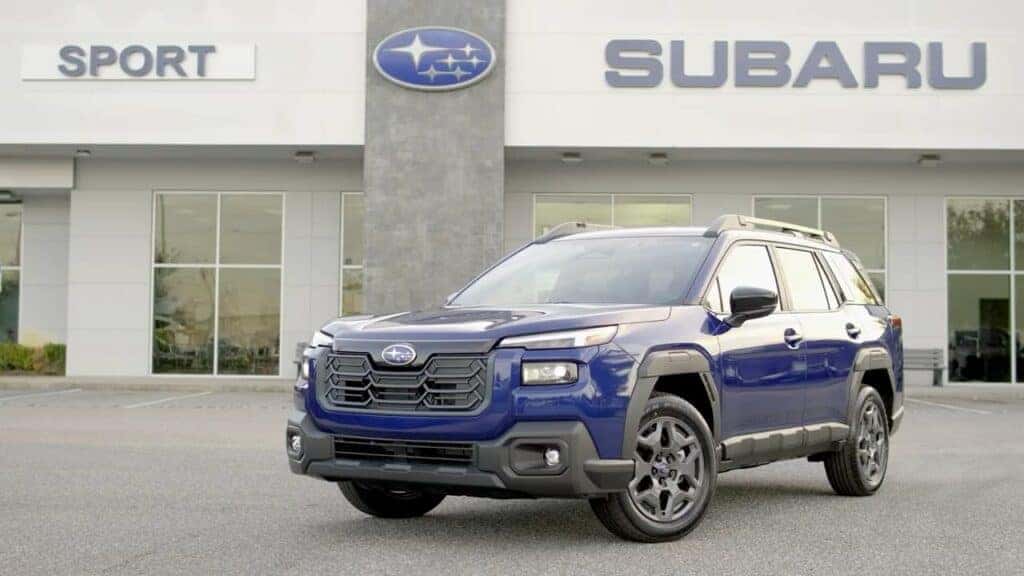
Long commutes across Central Florida and weekend trips to the coast have a way of testing a driver’s patience, especially when traffic slows to a crawl or stretches on for hours. Subaru built its 2026 lineup with driver-assist technology that answers to exactly these situations. Subaru hands-free driving is now available across several models, though the systems differ quite a bit depending on which vehicle you choose.
At Sport Subaru South, we field questions about this technology often, so we put together a clear breakdown of what each system does, where it works, and what it asks of the driver.
Understanding Subaru Hands-Free Driving Assist
Subaru hands-free driving assist relies on sensors, cameras, and mapping data working together to keep a vehicle centered in its lane and at a safe following distance, all while watching the driver to confirm they’re paying attention. This tech is meant to lighten the physical and mental load of long stretches behind the wheel, whether that’s a highway drive up to North Florida or a slow grind through a tourist corridor near the theme parks.
Before browsing our new inventory, it helps to understand that “hands-free” doesn’t mean the same thing across every Subaru model. Two distinct systems exist, and they’re built for very different driving conditions.
Hands-Free Assist vs. Traffic Jam Assist: What’s the Difference
Highway Hands-Free Assist and Traffic Jam Assist share a similar goal, keeping a vehicle safely on its path with reduced driver input, but they run in almost opposite conditions. Highway Hands-Free Assist handles higher-speed, open-road driving on multi-lane highways. Traffic Jam Assist, on the other hand, is built for the stop-and-go crawl of congested traffic and caps out at much lower speeds. Think interstate versus gridlock.
Driver-Supervised, Not Autonomous: What “Hands-Free” Really Means
Some drivers ask whether Subaru has actually built a self-driving car. It hasn’t, at least not in the sense most people mean. These are Level 2 driver-assist systems under SAE classification, meaning the vehicle can manage steering, acceleration, and braking under specific conditions, but the driver remains fully responsible at all times. Going hands-off doesn’t mean checking out mentally. Every system discussed here is built around that principle.
2026 Subaru Outback Touring and Touring XT: Highway Hands-Free Assist
The 2026 Subaru Outback introduces EyeSight Highway Hands-Free Assist, the first hands-free highway system on any Subaru model. It comes standard on Outback Touring and Touring XT, and allows hands-free driving at speeds up to 85 mph on most U.S. interstate highways.
Owners of existing 2026 Outback Touring and Touring XT vehicles can activate it through a no-cost software update, while vehicles sold after January 19, 2026, will already have it enabled from the factory. Subaru Outback drivers looking for a long-distance road trip companion will find this to be the most capable system in the current lineup.
How Hands-Free Assist Works on Most Interstate Highways
Subaru Outback hands-free driving expands on the brand’s existing EyeSight suite by adding GPS data, 3D HD maps, millimeter-wave radar, and a camera-based system. Millimeter-wave radar detects the distance and speed of vehicles ahead, while HD mapping gives the system detailed knowledge of lane structure and road curvature before the vehicle even reaches that point. Once adaptive cruise control is active on a highway with at least two lanes, the system can engage automatically and take over steering, speed, and lane position up to 85 mph.
The feature bundles several supporting technologies, including advanced adaptive cruise control, highway active lane change assist, highway automatic resume assist, pre-curve speed control, and emergency stop assist with safe lane selection. Together, these give 2026 Subaru Outback hands-free driving a level of highway capability that goes well beyond a standard cruise control system.
Conditions and Requirements for Highway Use
Highway Hands-Free Assist only works on certain pre-determined roads, generally most interstate highways with multiple lanes and limited access. It also depends on a continuously updated map database, which requires an active MySubaru Companion or Companion+ subscription. Subaru includes a five-year free trial of the base Companion plan with a new vehicle, so most 2026 Outback buyers are covered without an added cost for the first five years. Without current map data, the system can’t verify road type accurately enough to engage.
Driver attentiveness is monitored the entire time through DriverFocus, Subaru’s second-generation driver-monitoring camera system. It uses a wider-angle, higher-resolution camera along with infrared LEDs that can track eye gaze even through most sunglasses or eyeglasses, and it supports recognition settings for up to five different drivers.
A dashboard indicator makes it easy to know your status at a glance: green icons mean hands-on assist mode, while blue icons confirm Highway Hands-Free Assist is active. If DriverFocus senses wandering attention, the system disengages right away and prompts the driver to take back control.
For families weighing an upgrade, financing an Outback Touring is straightforward, and our team can walk you through financing options that fit a range of budgets.
2026 Subaru Solterra: Low-Speed Traffic Jam Assist
The 2026 Solterra, Subaru’s all-electric SUV, takes a different approach with Traffic Jam Assist. Rather than highway speeds, this feature is built for the frustrating low-speed traffic that’s all too familiar on major roads near Orlando, Florida, during peak tourist season. EyeSight Driver Assist Technologies come standard on every 2026 Solterra AWD EV, with Traffic Jam Assist available on top of that, so it’s worth confirming the specific vehicle you’re looking at has it.
How Traffic Jam Assist Helps in Stop-and-Go Traffic Up to 25 MPH
Traffic Jam Assist activates around 25 mph or lower, using Dynamic Radar Cruise Control and Lane Tracing Assist to hold the vehicle’s position in its lane while managing acceleration and braking. It requires reliable lane markings and vehicle detection to function properly, plus an active trial or subscription to Drive Connect for connected navigation. Driver override is simple: pressing the accelerator above roughly 6 mph, applying the brakes, or steering beyond a set threshold cancels the system right away and puts control back in the driver’s hands.
2026 Subaru Trailseeker: Traffic Jam Assist as Part of EyeSight
On the Trailseeker, Traffic Jam Assist is standard as part of the EyeSight suite, offering hands-free steering assistance with driver supervision in low-speed traffic jams up to 25 mph on most major highways. It works the same way the Solterra’s system does, and like the Solterra it requires an active trial or subscription to Drive Connect.
For Trailseeker drivers navigating congested stretches around Central Florida, this feature offers the same stress relief during slow traffic that Solterra owners get, without needing to check the equipment list first.
Safety, Supervision, and Driver Responsibility
Across every model, Subaru builds these as driver-assist technologies, not substitutes for an attentive driver behind the wheel. Keep your eyes on the road and your hands ready to grab the wheel the second the system asks for it. Because each system operates at Level 2 automation, the driver is always the fallback if something goes wrong. Subaru designed it this way on purpose, and it’s something every Outback driver, Solterra owner, or Trailseeker driver should understand clearly before relying on these features.
Conditions differ by system, but a few things hold across all three:
- Cruise control must be active first, which means adaptive cruise on the Outback and Dynamic Radar Cruise Control with Lane Tracing Assist on the Solterra and Trailseeker
- The Outback’s Highway Hands-Free Assist needs a pre-determined highway with two or more lanes, while Traffic Jam Assist works in congested traffic on most major highways
- Hands need to stay ready to resume control at any moment
- Eyes need to stay on the road, monitored by Subaru’s driver-monitoring camera
- An active, relevant subscription must be in place, meaning MySubaru Companion or Companion+ for the Outback and Drive Connect for the Solterra and Trailseeker
When These Systems Disengage or Require Driver Input
Each system has its own way of handing control back. On the Outback, DriverFocus continuously tracks attentiveness and disengages Highway Hands-Free Assist the moment it senses a lapse, prompting the driver to take over. On the Solterra, pressing the accelerator past about 6 mph, braking, or steering past a set threshold cancels Traffic Jam Assist immediately. In both cases, the systems are built to fail safely: rather than keep running without confidence in the conditions, they hand things back to the driver.
Explore Hands-Free Driving Assist at Sport Subaru South
If you’re weighing which Subaru fits your driving routine, whether that’s a highway commute, a coastal road trip, or daily traffic through Central Florida, we’d rather show you these features in person than describe them over and over on a page.
- Compare Outback Touring and Touring XT trims side by side
- Ask our team which driver-assist features are active on our current inventory
- Get straight answers about subscriptions and map updates before you decide
Contact us to schedule a test drive and see Subaru hands-free driving assist for yourself.
0 comment(s) so far on Which Subaru Models Have Hands-Free Driving Assist?