




2026 Subaru Outback vs. 2026 Toyota 4Runner
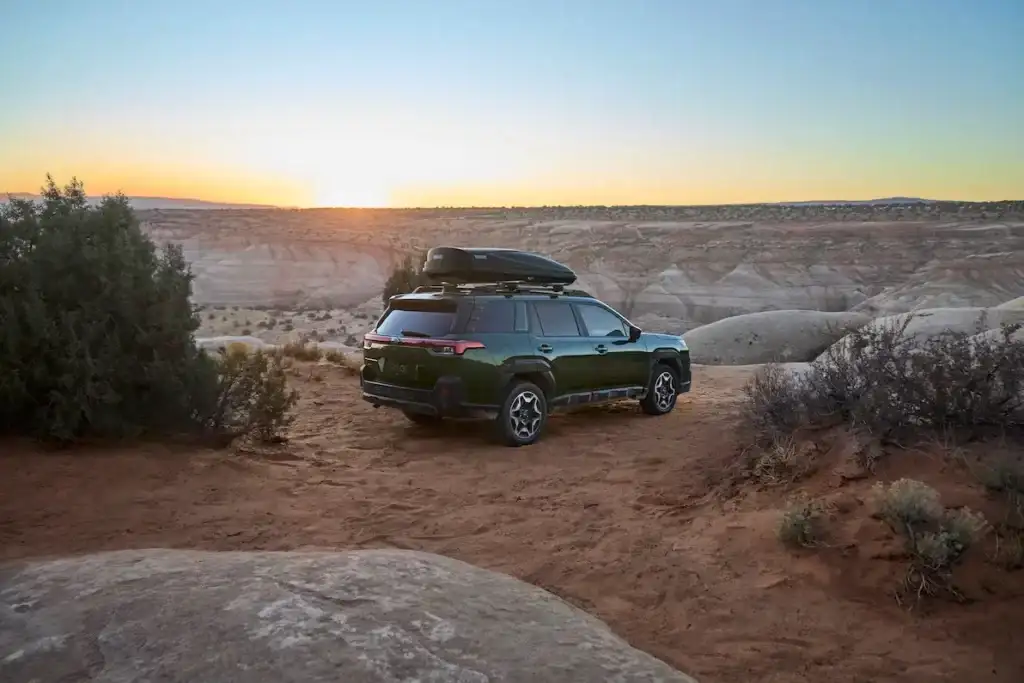
Choosing between the 2026 Subaru Outback vs Toyota 4Runner really comes down to how you actually drive. If you’re commuting through Orlando traffic or heading toward the coast most weekends, the Outback’s comfort and standard all-wheel drive will matter far more than rock-crawling hardware ever would. Schedule a test drive at Sport Subaru South and compare Outback trims in person.
2026 Subaru Outback vs 2026 Toyota 4Runner: Daily Driver or Off-Road Beast?
The Outback rides on a car-based unibody platform, which is why it feels more like a tall wagon than a truck. That structure means a quieter cabin, sharper handling, and better fuel efficiency for the miles most people actually drive. The 4Runner sits on Toyota’s body-on-frame TNGA-F platform, the same architecture used in serious off-roaders, and that changes the whole driving experience: rougher ride, more truck-like manners, less daily polish.
This isn’t really a fair fight if your weekends involve towing a boat through rutted terrain near a state park. But for the vast majority of Central Florida drivers navigating I-4 traffic or hauling kids to practice, the Outback’s balance of capability and comfort wins out.
The Outback suits daily driving and light adventure well. The 4Runner is built for dedicated off-road use.
Pricing and AWD/4WD Entry Costs Compared
Every Outback trim (Premium, Limited, Limited XT, Wilderness, Touring, and Touring XT) comes with standard Symmetrical All-Wheel Drive. There’s no upgrade path to figure out and no guessing about what you’re getting.
The 4Runner’s base SR5 trim starts as rear-wheel drive with a standard automatic limited-slip differential, though a part-time 4WD system is also available on the SR5; every other trim comes standard with 4WD. The Outback gives you all-weather traction as the standard, while 4Runner shoppers pay more to get the drivetrain that Outback drivers take for granted from the entry point up.
Standard AWD across every trim gives the Outback the edge on entry-level value.
2026 Subaru Outback: Trims Built for Everyday Versatility
Subaru offers six Outback trims for 2026: Premium, Limited, Limited XT, Wilderness, Touring, and Touring XT. The Premium, Limited, and Touring run Subaru’s 2.5-liter flat-four SUBARU BOXER engine, producing 180 horsepower and 178 lb-ft of torque. Step up to the Limited XT, Touring XT, or Wilderness and you get the turbocharged 2.4-liter, delivering 260 horsepower and 277 lb-ft of torque. Every trim pairs with a CVT and all-wheel drive, so there’s no drivetrain guessing game.
Technology stays consistent across the lineup too. A 12.1-inch touchscreen with wireless Apple CarPlay and Android Auto comes standard, alongside a 12.3-inch digital instrument cluster. Higher trims add perforated or Nappa leather, Harman Kardon audio, and ventilated seats.
Outback Wilderness: 9.5 Inches of Ground Clearance for Light Off-Roading
The Wilderness trim raises ground clearance to 9.5 inches, 0.8 inch higher than other Outback trims, and adds electronically adjustable dampers along with Bridgestone Dueler all-terrain tires on 17-inch wheels. Approach angle sits at 20 degrees, breakover at 21.2 degrees, and departure at 22.5 degrees.
Dual X-MODE gives drivers dedicated settings for Snow/Dirt and Deep Snow/Mud conditions, and the Wilderness can tow up to 3,500 pounds while still returning up to 27 MPG. It won’t handle extreme rock-crawling, but for unpaved roads near Central Florida springs and state parks, it holds up well. Consumer Reports named the Wilderness a Recommended Model, and Subaru has been named Consumer Reports’ Best Overall Automotive Brand for two consecutive years.
EyeSight Safety Tech and Standard Symmetrical AWD
Every Outback trim comes with Subaru’s EyeSight suite, which includes Front Pre-Collision Braking, Front Cross Traffic Braking, Adaptive Cruise Control, Lane Centering, Lane Departure and Sway Warning, and Emergency Stop Assist. Touring and Touring XT trims add Highway Hands-Free Assist, a supervised driving feature usable up to 85 mph.
That standard safety suite, paired with Symmetrical All-Wheel Drive on every trim, is a big part of why the Outback earned an IIHS Top Safety Pick+ designation, with Good ratings in small overlap front, moderate overlap front, and side crash tests. The Outback’s standard safety suite and AWD give it a clear daily-use safety edge.
2026 Toyota 4Runner: Trims Built for Rugged Capability
Toyota offers nine 4Runner trims for 2026: SR5, TRD Sport, TRD Off-Road, TRD Sport Premium, TRD Off-Road Premium, Limited, Platinum, Trailhunter, and TRD Pro. Aside from the RWD-based SR5 (which also offers a part-time 4WD option), every other trim comes standard with 4WD. TRD Off-Road, TRD Off-Road Premium, TRD Pro, and Trailhunter add a two-speed transfer case with high and low range, A-TRAC traction control, and a locking rear differential, while Limited and Platinum use a full-time 4WD system with a Torsen limited-slip center differential.
The base engine is a turbocharged 2.4-liter i-FORCE unit producing up to 278 horsepower and 317 lb-ft of torque, standard on the SR5, TRD Sport, and TRD Sport Premium. With nine trims to choose from, there’s a 4Runner configuration for nearly every kind of buyer, whether you’re commuting in an SR5 or heading off-grid in something built for it.
TRD Off-Road and TRD Pro Trims
The TRD Off-Road and TRD Off-Road Premium trims add Bilstein shocks, a locking rear differential, Multi-Terrain Select, and Crawl Control, riding on 18-inch wheels wrapped in 33-inch all-terrain tires. The TRD Pro pushes further with FOX QS3 2.5-inch internal-bypass shocks, a Stabilizer Disconnect Mechanism, a TRD air intake, and 33-inch Toyo A/T tires.
Buyers who want overlanding-ready equipment should look at the Trailhunter, which brings Old Man Emu shocks, an ARB roof rack, a high-mount air intake, an onboard compressor, and steel skid plates. It’s essentially the closest thing to a wilderness package 4Runner in the current lineup, purpose-built for extended trips off the pavement.
i-FORCE MAX Hybrid Powertrain and Towing Power
The i-FORCE MAX hybrid powertrain produces 326 horsepower and 465 lb-ft of torque, and it’s standard on the Platinum, TRD Pro, and Trailhunter trims, with availability on TRD Off-Road, TRD Off-Road Premium, and Limited in 4WD configuration. This hybrid setup adds both power and towing capacity while improving on the gas-only powertrain’s fuel economy. The 4Runner’s trim breadth and hybrid option give off-road-focused buyers real flexibility.
Fuel Economy, Towing Capacity and Real-World Performance
The Outback’s non-turbo trims return up to 31 MPG highway and 25 MPG city, while the turbocharged Limited XT and Touring XT come in at 29 MPG highway and 21 city, and the Wilderness lands at 27 MPG highway and 21 city. Towing tops out at 3,500 pounds on the turbocharged Limited XT, Touring XT, and Wilderness trims, while the non-turbo Premium, Limited, and Touring trims are rated for 2,700 pounds.
The 4Runner trades some of that efficiency for towing muscle. Most trims, including the SR5, tow up to 6,000 pounds, while the Platinum, TRD Pro, and Trailhunter are rated at 5,800 pounds due to added equipment weight. RWD gas models get 20/26 MPG city/highway, 4WD gas variants drop slightly to 19/25, and the hybrid improves things to 23/24.
The Outback wins on fuel economy. The 4Runner wins on towing capacity. Compare Outback trims with our team and get a feel for the ride firsthand.
Cargo, Passenger Space and Everyday Comfort
Passenger comfort is one of the Outback’s quiet strengths. Front and rear legroom measure 43.0 and 39.5 inches respectively, with up to 112.3 cubic feet of passenger volume on Premium and Wilderness trims (111.1 with the moonroof), or 111.1 cubic feet on Limited, Touring, Limited XT, and Touring XT trims. Cargo space comes in at 34.6 cubic feet behind the rear seats, expanding to 80.5 cubic feet with the seats folded down. It’s a five-passenger layout built around real-world usability.
The 4Runner offers 41.8 inches of front legroom and 34.8 inches in the second row, with cargo volume of 48.4 cubic feet behind the second row on two-row gas models, expanding to 90.2 cubic feet folded. Hybrid models max out closer to 82.6 cubic feet. A seven-passenger third row is available on gas SR5 and Limited trims only; hybrids stay five-passenger. The body-on-frame platform that helps off-road capability also affects on-road ride quality and interior refinement compared to a unibody design like the Outback’s.
The Outback edges out the 4Runner on everyday passenger comfort. The 4Runner offers more outright cargo room when configured for it.
Which SUV Fits Your Lifestyle?
Think about your actual weekly routine before deciding. If most of your driving happens on I-4, the 528, or through Kissimmee’s tourist corridors, the Outback’s ride comfort and fuel efficiency will matter more than towing headroom you rarely use. If you’re hitching up a boat trailer for the St. Johns River most weekends and tackling unpaved forest roads along the way, the 4Runner’s towing capacity and TRD hardware start to make more sense.
Best for Commuters and Road-Trippers
Commuters and road-trippers in Sanford, St. Cloud, Apopka, and greater Orlando tend to gravitate toward the Outback. Standard AWD, EyeSight safety tech, and a comfortable, tech-forward cabin make it dependable for long highway stretches and everyday errands alike.
Best for Towing and Off-Roading
For buyers whose priority list starts with towing capacity and trail-ready hardware, the 4Runner’s TRD Off-Road, TRD Pro, and Trailhunter trims deliver off-road engineering that the Outback simply isn’t designed to match. You’ll give up some ride comfort and fuel economy along the way, so it’s worth being honest with yourself about which trade-offs actually fit your driving habits.
Test Drive the 2026 Subaru Outback at Sport Subaru South
Numbers on a spec sheet only tell part of the story. The Outback’s ride comfort, cabin technology, and standard AWD confidence are things you feel behind the wheel, not just read about. At Sport Subaru South, located at 9951 S Orange Blossom Trl in Orlando, we make it easy for drivers from Kissimmee, Sanford, St. Cloud, and Apopka to compare Outback trims side by side.
Schedule Your Visit
Whether you’re weighing the standard Outback lineup against the Wilderness trim’s added ground clearance, or you simply want to see how the 2026 Subaru Outback vs Toyota 4Runner comparison feels in real driving conditions, our team can walk you through it.
Contact Sport Subaru South to schedule a test drive or ask about current Outback availability, and find out firsthand why so many Central Florida drivers choose Subaru for their daily commute and weekend getaways alike.
0 comment(s) so far on 2026 Subaru Outback vs. 2026 Toyota 4Runner