




Can a Subaru Forester Tow a Camper?
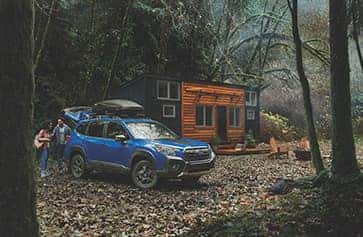
If you’re eyeing a teardrop trailer or a compact pop-up for weekend trips around Central Florida, you’re probably wondering whether your Forester can handle the job. Good news: a Subaru Forester can tow a camper, but how much depends heavily on which trim you own. Before you hitch anything up, it helps to browse our Forester inventory to see which trim fits your towing plans.
This guide breaks down Forester towing capacity by trim, the types of campers that realistically pair with this SUV, and the checks you should run before your first trip, including real weight math so you’re not caught off guard by tongue weight or loaded camper weight once you hit the road.
Can a Subaru Forester Tow a Camper? The Short Answer
Yes. A Subaru Forester can tow a camper, though the answer changes depending on trim. Standard Forester trims, Base, Premium, Sport, Limited, and Touring, top out at 1,500 lbs of towing capacity. The Forester Wilderness, built for more demanding outdoor use, is rated up to 3,500 lbs, the highest towing capacity Subaru has ever offered on this model.
A standard Forester pairs well with small teardrop trailers and utility trailers. A Wilderness trim opens the door to slightly larger pop-up campers and heavier gear trailers. Either way, this article focuses on small and light campers, not full-size travel trailers, which exceed what any Forester trim is built to tow.
Subaru Forester Towing Capacity Explained
Subaru rates towing capacity differently across the Forester lineup, and the numbers are tied directly to drivetrain and cooling upgrades rather than trim aesthetics. The current gas-powered Forester lineup breaks down like this:
| Trim Group | Max Towing Capacity |
| Base/Premium/Sport/Limited/Touring | 1,500 lbs |
| Wilderness | 3,500 lbs |
Standard Forester Trims: Up to 1,500 lbs
Base, Premium, Sport, Limited, and Touring trims share a towing ceiling of 1,500 lbs. Subaru’s genuine hitch accessory for these trims carries a rating of 1,500 lbs towing capacity and 150 lbs of tongue weight. That’s enough for a small teardrop or a modest utility trailer, but it doesn’t leave much cushion once you factor in gear, water, and propane.
Forester Wilderness: Up to 3,500 lbs
The Wilderness trim changes the equation considerably. Subaru achieved the 3,500 lbs rating partly through an uprated transmission cooler designed to handle sustained towing loads better than standard trims. The optional 2-inch hitch supports the full 3,500 lbs with a 350 lb tongue weight limit on Wilderness, and that tongue weight figure is the one worth writing down, since it’s easier to exceed than the tow rating itself.
What Types of Campers Work Best With a Forester
Once you know your Forester’s towing ceiling, the next question is what kind of camper actually makes sense for it. Several categories align well with either standard or Wilderness capacities.
Teardrop Trailers and Ultralight Campers
Teardrop trailers are the most natural pairing for a Forester. They typically weigh between 500 and 3,200 lbs, averaging around 1,700 lbs, though lighter ultralight models exist specifically for smaller tow vehicles. These numbers come from general RV industry weight data rather than anything Forester-specific, so always cross-check against your camper’s actual GVWR.
Compact Pop-Up Campers
Pop-up campers offer more interior space than teardrops while staying relatively light. Dry weights typically land between 1,400 and 3,500 lbs, with loaded weight rarely exceeding 4,500 lbs and GVWR generally falling between 2,500 and 4,500 lbs. Other sources put the dry weight range closer to 1,400 to 4,000 lbs, with an average empty weight near 2,300 lbs. Given these numbers, pop-up campers on the heavier end are usually better matched to a Wilderness trim than a standard Forester.
Utility and Gear Trailers
If you’re hauling bikes, kayaks, or camping gear rather than a full sleeping unit, small enclosed utility trailers can run up to 7,000 lbs GVWR when fully loaded, though trailers 12 feet or shorter tend to average a cargo capacity closer to 2,200 lbs. Treat these as rough estimates rather than firm standards, and weigh your loaded trailer whenever possible before towing.
Understanding Real Towing Weight: More Than Just the Camper
A camper’s advertised weight rarely tells the whole story. Knowing a few weight terms helps you avoid a nasty surprise on your first towing trip.
Camper Weight, Loaded vs. Dry
Dry weight refers to the camper with no water, propane, or gear loaded in. Once you add those essentials, the number climbs to what’s called loaded weight, and the gap is bigger than most first-time towers expect. A 20-gallon freshwater tank alone adds about 167 lbs before you’ve packed a single cooler.
Take a teardrop with a 1,330 lbs dry weight, a real ultralight figure from the teardrop category. Fill the water tank, add propane and gear, and you can be at or past the standard Forester’s 1,500 lbs towing limit on a camper that looked comfortably under it on paper. A slightly heavier teardrop, or a Forester already carrying passengers and cargo, pushes you over. Dry weight alone shouldn’t be your deciding factor when shopping for a camper to pair with your Forester.
Tongue Weight, Passengers, and Cargo
Tongue weight matters just as much as overall towing capacity. It typically runs 10 to 15 percent of a trailer’s gross weight. On a 1,500 lbs load, that’s 150 to 225 lbs pressing down on the hitch, which is right at or above the 150 lb tongue weight limit on a standard Forester’s hitch. Passengers and cargo inside the Forester also count against your vehicle’s payload capacity, so a fully loaded cabin plus a heavy trailer can add up faster than expected.
What to Check Before Towing With Your Forester
Before you hook up a trailer for the first time, run through a short checklist. Skipping any of these steps increases risk and can strain your Forester’s drivetrain.
Owner’s Manual and Manufacturer Guidelines
Always confirm your specific towing capacity using your owner’s manual or the door-jamb sticker rather than relying on general trim knowledge. Subaru directs owners to verify exact towing capacity with their retailer, since ratings can shift slightly by model year and configuration.
Hitch, Wiring, and Trailer Brakes
A genuine Subaru hitch is crash-tested to Forester safety standards, but it still needs proper installation along with a compatible wiring harness. Trailer brakes may be required by your state for heavier loads, so check your local regulations and your specific trim’s setup. If you’re unsure whether your current hitch setup is trip-ready, schedule a hitch inspection with our service team before you head out.
Tire Pressure and Vehicle Service Condition
Towing puts extra strain on tires, brakes, and cooling systems, especially in Orlando’s heat and on highway grades near the springs region. Maintain proper tire pressure according to your door-jamb sticker, and have your Forester’s fluids, brakes, and cooling system checked before a long tow, particularly during Florida’s warmer months.
Camper GVWR Confirmation
Confirm your camper’s GVWR before towing, and never exceed it regardless of what your Forester is rated to tow. To find your available cargo capacity, subtract the camper’s dry weight from its GVWR. A teardrop with an approximate GVWR of 2,500 lbs and a dry weight near 1,550 lbs, for instance, leaves roughly 950 lbs for water, gear, and propane, though treat these figures as approximate since manufacturer data on dry and tongue weights isn’t always consistent. Teardrop camper GVWR generally falls between 1,500 and 3,500 lbs depending on the model, so check this number carefully before any trip.
Hitting the Road: Central Florida Camping With Your Forester
Once your Forester is set up for towing, Central Florida has plenty of camping within easy reach. Wekiwa Springs State Park sits just minutes from downtown Orlando and offers wildlife viewing and hiking trails alongside standard campsites. Lake Louisa State Park, near Clermont, provides 60 campsites with full hookups and 50-amp electric service, plus cabin rentals for those easing into towing life. Both parks, like most Florida state parks, offer water, electricity, grills, showers, and dump stations, making them practical first destinations for a lightly loaded teardrop or pop-up towed behind your Forester.
Find the Right Forester for Your Towing Needs at Sport Subaru South
Matching Trim to Camper
Whether you need a standard trim for a small teardrop or a Wilderness for something heavier, the right match keeps your trips simple and stress-free. Sport Subaru South carries the full Subaru lineup, so if a Forester’s capacity doesn’t quite fit your camper, the Ascent steps up to 5,000 lbs. Our service department can also install hitches and verify tow ratings before your trip, giving you confidence before you’re out on I-4 or headed toward Clermont.
Visit Us in Orlando
We’re located at 9951 S Orange Blossom Trail in Orlando, about two miles south of Florida Mall on OBT, and we serve drivers throughout St. Cloud, Kissimmee, and the wider Central Florida area.
Ready to Get Started?
Contact our team or apply for financing on a Wilderness trim to get your towing-ready Forester on the road.
0 comment(s) so far on Can a Subaru Forester Tow a Camper?