




Can a Subaru Ascent Fit 3 Car Seats?
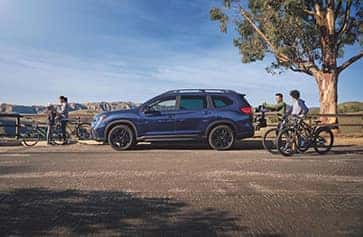
If you’re a parent sizing up the Subaru Ascent for your growing family, chances are horsepower is the last thing on your mind. What you really want to know is whether all three kids can ride safely, with proper car seats installed, without turning every single trip into a logistical puzzle. The short answer is yes, it’s possible, but the details matter a lot. Browse our new Subaru Ascent inventory to see available configurations, and keep reading for the honest, specific breakdown you need before making this decision.
Whether you can actually fit three car seats comes down to which Ascent configuration you choose, which anchor positions you use, and which specific car seat models you’re working with. This guide walks through all of it so you can make the right call for your family.
How Many Seats Does the Subaru Ascent Have and Why It Matters for Car Seats
When families ask how many seats the Ascent has, the answer depends on which configuration you choose. It seats either 7 or 8 passengers across three rows. That distinction might seem minor on paper, but it has a real impact on how you install car seats and how easily you can reach each row day to day.
7-Passenger Captain’s Chairs vs. 8-Passenger Bench Seat
The 7-passenger version comes with captain’s chairs in the second row. The 8-passenger version swaps those out for a full bench seat. Captain’s chairs create a natural center aisle, which makes it much easier to reach a child in the third row without folding anything down or squeezing past bulky safety equipment. The bench seat gives you three seating positions across the second row, opening up the possibility of fitting three car seats side by side.
One detail families often miss: on the 8-passenger bench, the passenger-side position (2P) takes up nearly half the bench width on its own, leaving the driver-side (2D) and center (2C) positions sharing just over half. Three car seats can still fit, but the spacing is tighter than the bench label suggests.
How Configuration Affects Car Seat Compatibility
Your choice here shapes your entire car seat strategy. With captain’s chairs, you lose that center second-row position, so fitting three car seats means splitting them between rows. With a bench seat, three across the second row becomes genuinely possible depending on the width of the seats you’re using. Neither option is automatically better. It comes down to your children’s ages, the types of seats you’re installing, and how often you need rear-row access.
Trim Comparison at a Glance
| Trim | Seating Config | Key Family Feature | LATCH Access | Key Upgrade Over Previous Trim |
|---|---|---|---|---|
| Ascent Premium | 7-passenger (captain’s chairs) or 8-passenger (bench) | Choice of bench for three-across or captain’s chairs for center-aisle access | Lower anchors in 2nd and 3rd rows | Entry-level three-row seating with StarTex upholstery and All-Weather Package |
| Ascent Limited | 7-passenger (captain’s chairs) or 8-passenger (bench) | Same seating flexibility with premium materials | Lower anchors in 2nd and 3rd rows | Leather-trimmed upholstery, 20-inch alloy wheels, and navigation |
| Ascent Limited Bronze Edition | 7-passenger (captain’s chairs) | Center aisle access to third row | Lower anchors in 2nd and 3rd rows | Black StarTex upholstery with bronze styling accents |
| Ascent Touring | 7-passenger (captain’s chairs) | Top-tier cabin comfort with full third-row usability | Lower anchors in 2nd and 3rd rows | Nappa leather upholstery and Harman Kardon premium audio |
| Ascent Onyx Edition Touring | 7-passenger (captain’s chairs) | Premium center-aisle access with blacked-out styling | Lower anchors in 2nd and 3rd rows | Highest feature level with black exterior trim and 20-inch black-finish wheels |
Subaru Ascent Car Seat Anchors and Dimensions
Subaru engineered the Ascent with family use clearly in mind, and the anchor system reflects that. LATCH anchors are present in both the second and third rows, giving parents real flexibility when distributing car seats. The interior dimensions are generous for the class, which matters more than most people realize once you’re trying to snap a harness clip with a screaming toddler in your arms.
LATCH and Tether Anchor Placement
The Ascent goes beyond the government-required minimum of two lower anchor positions in the second row, adding one and a half extra lower anchor positions there. That extra coverage is helpful, but there are specific positions parents need to understand before assuming every spot is equally usable.
The center second-row position (2C) has lower LATCH anchors that aren’t ideally aligned with the seating position itself. A car seat installed at 2C may effectively occupy two seating positions rather than one, which limits your ability to fit a full row of three. In the third row, the driver-side position (3D) has LATCH anchors that sit between seat belt buckles in a way that can obstruct the buckles for adjacent seats. The third-row passenger-side position (3P) is the recommended third-row install location. It accommodates most forward-facing seats and boosters using a standard seat belt without interfering with the seat next to it.
Tether anchors are also well-placed behind each row, allowing forward-facing seats to be secured properly without awkward angles or hidden hardware.
Second-Row Space and Access
The second row offers 38.6 inches of legroom, 60.3 inches of shoulder room, and 40.0 inches of headroom. Those dimensions give you real working space when positioning seats and managing harnesses. The seats slide and recline to accommodate different car seat footprints, which is a genuine advantage when you’re trying to place a rear-facing infant seat at the correct recline angle while leaving enough room for whatever sits beside it.
Third-Row Fit and Accessibility
The third row provides 31.7 inches of legroom, 57.0 inches of shoulder room, and 36.2 inches of headroom. That’s reasonable for children and smaller adults, though fitting a rear-facing infant seat back there would be tight. A forward-facing harnessed seat or a high-back booster generally works much better in the third row, particularly at the 3P position. Third-row access is practical enough to use daily, and the second-row seats can slide or fold to open a usable path to the back even with car seats installed.
Common 3 Car Seat Configurations in the Subaru Ascent
There’s no single right answer for how to arrange three car seats in the Ascent. The best layout depends on your children’s ages, the types of seats you’re working with, and which version of the Ascent you own. Here are three real-world scenarios that come up frequently.
Three Across in the Second Row
A family with a newborn, a toddler, and a preschooler could place an infant carrier at 2P, a narrow rear-facing convertible at 2D, and a compact forward-facing seat at 2C using the seat belt rather than LATCH, which avoids the anchor alignment issue at that position. This setup works best in the 8-passenger model with the bench seat and requires narrower seat models across the board.
Two in the Second Row, One in the Third Row
A family with a toddler and two school-age children might place a forward-facing harnessed seat and a high-back booster in the second row, then put the older child in a backless booster at the recommended 3P position in the third row. This layout works with both bench and captain’s chair configurations and keeps pathways clear.
Split Configuration for Captain’s Chair Models
Families who prioritize third-row access often do well placing one car seat in the second row on one side and another in the third row at 3P, with the third child in the open second-row captain’s chair. This works especially well for Gulf Coast families who load beach gear into the cargo area regularly and need smooth access to all three rows.
If you’re weighing your options between new and used Ascent models, configuration availability across trims is a practical factor worth confirming before you buy.
What Type of Car Seat Are You Installing? It Matters More Than You Think
Seat type changes everything when you’re trying to fit multiple restraints in the same vehicle. Car seats in the 17 to 18 inch width range are significantly easier to fit three across in the Ascent’s second row. Seats that are 19 inches or wider create real installation challenges, even in a cabin with 60.3 inches of second-row shoulder room.
Rear-facing infant carriers have a large footprint and often restrict the seat in front. Rear-facing convertibles are even bigger. Forward-facing harnessed seats are more compact but still vary meaningfully in width. High-back boosters can be surprisingly wide.
Before assuming three seats will fit, measure the exact width of each seat you’re installing, not just the general category it falls into. A slightly narrower seat that’s a bit less plush might give you the clearance you need to make three seats work safely.
Why You Can’t Skip the Real-World Fit Test
Specs and diagrams only take you so far. Car seat compatibility isn’t just about whether a seat physically fits in the space. It’s about whether it installs securely, whether the LATCH anchors are accessible from that position, whether the recline angle is correct for a rear-facing install, and whether the seat next to it can still be buckled without interference.
What looks workable on paper can become genuinely frustrating once you’re working with your actual seats in your actual vehicle. Resources like The Car Seat Lady can help you research seat-specific compatibility before you visit, but nothing replaces a hands-on test with your exact equipment.
If you’re considering a Certified Pre-Owned Ascent, bring your seats along during your test drive so you can check fit before committing.
Tips for Getting the Best Fit With 3 Car Seats
A few practical adjustments can make a real difference when fitting three car seats in the Subaru Ascent.
Choose the Right Configuration and Measure Before You Buy
Choose the 8-passenger configuration if three across the second row is your goal. The bench seat is the only way to get three second-row positions, and it’s available on the Premium and Limited trims.
Measure your car seat widths against the 60.3 inches of second-row shoulder room before purchasing. Three seats at 18 inches each total 54 inches, leaving about six inches of margin. Wider seats reduce that margin quickly.
Optimize Installation and Use the Layout to Your Advantage
Use seat belt installation at the 2C position rather than LATCH to avoid the anchor misalignment issue at that spot. The seat still installs securely using the belt, and it won’t crowd adjacent positions the way an anchor-based install can.
In captain’s chair models, take advantage of the center aisle to reach third-row children without disturbing second-row seats. Sliding the front passenger seat forward slightly can also open up meaningful room for a rear-facing seat directly behind it.
Verify Each Seat Is Secure
Once all three seats are installed, check that each one is independently secure. Neighboring seats can shift each other’s positioning during installation, and a three-seat arrangement leaves less margin for error. A certified child passenger safety technician is always worth consulting if anything feels uncertain.
Come Try It in Person at Sport Subaru South in Orlando
At Sport Subaru South, we work with families across Orlando and Central Florida every week who come in with this exact question. We understand what it actually means to need a vehicle that works for your family, not just one that looks good in a brochure.
Schedule Your Fit Check
The best way to know if the Subaru Ascent works for your specific car seats is to come in and test it yourself. Bring your seats, bring your kids if you’d like, and we’ll help you explore different configurations in person. You can compare the 7-passenger and 8-passenger setups side by side, try different installation positions, and get straightforward answers from people who know this vehicle well.
Reach Out to Our Team
Stop by at 9951 S Orange Blossom Trail, Orlando, FL 32837. Sales hours run Monday through Friday from 8:30 a.m. to 7:00 p.m. and Saturday from 8:30 a.m. to 6:00 p.m. You can also contact our team to set up a time before you visit. We’re here to help you find the right fit for your family.
0 comment(s) so far on Can a Subaru Ascent Fit 3 Car Seats?