




2026 Subaru Outback vs 2026 Hyundai Santa Fe
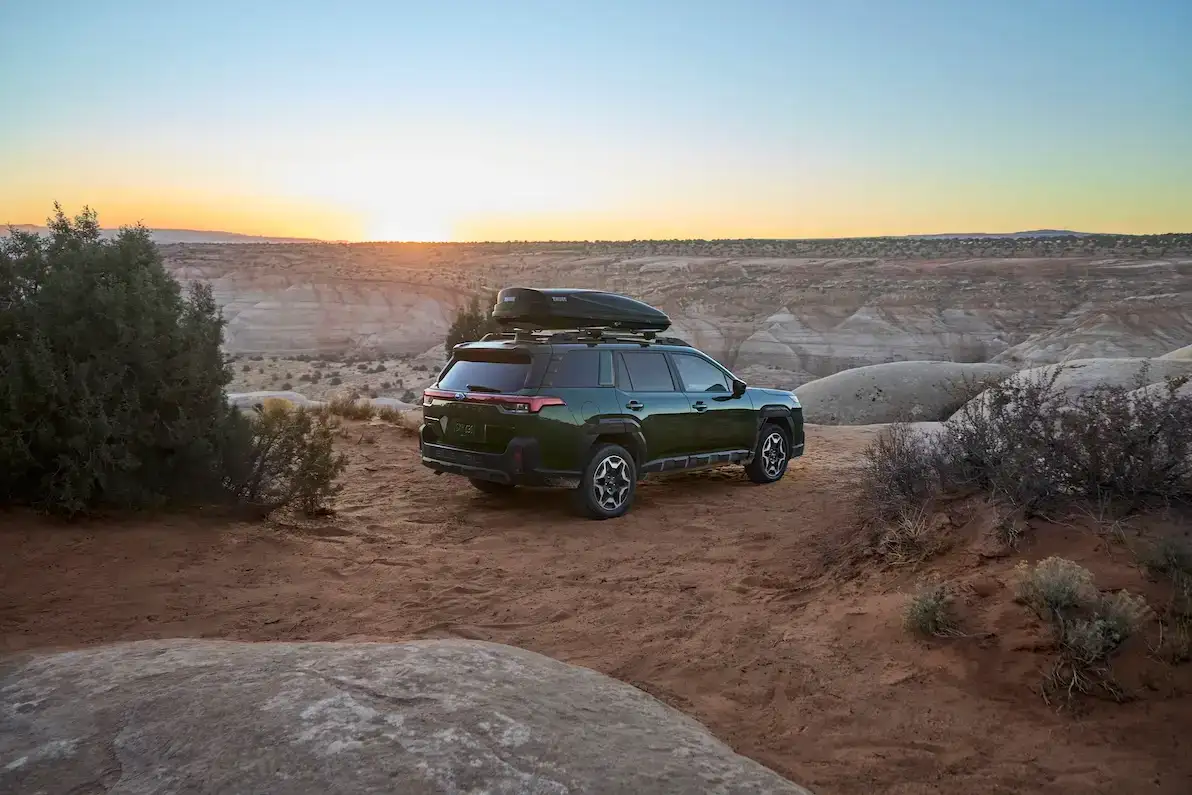
Choosing between midsize SUVs means weighing practical needs against lifestyle preferences. At Sport Subaru South, the 2026 Subaru Outback and 2026 Hyundai Santa Fe represent two distinct approaches to family transportation. The Outback leans into its wagon-SUV heritage with standard all-wheel drive and impressive ground clearance, while the Santa Fe positions itself as a more traditional SUV option with bold styling and generous interior space.
This comparison explores how these vehicles stack up across the metrics that matter most: performance, fuel economy, interior room, safety technology, and overall value. Understanding these differences helps you determine which model aligns with your driving habits and family needs.
2026 Subaru Outback vs 2026 Hyundai Santa Fe: Quick Overview
The debate comes down to fundamental design philosophy. Subaru built the Outback as a raised wagon emphasizing capability without sacrificing on-road manners. Every Outback comes standard with Subaru’s Symmetrical AWD system and 8.7 inches of ground clearance, making it ready for varied terrain right off the lot.
Hyundai designed the Santa Fe as a more conventional SUV with available three-row seating, positioning it as a spacious family hauler. While all-wheel drive is optional rather than standard, the Santa Fe counters with a powerful turbocharged engine and a cabin that prioritizes passenger comfort.
Performance and All-Wheel Drive Capability
The performance conversation reveals how each automaker prioritized different aspects. Subaru designed the Outback with Symmetrical AWD as its foundation. This system continuously sends power to all four wheels, improving stability in rain, snow, and loose surfaces. The low center of gravity helps it handle predictably despite its SUV height. Drivers who frequently encounter challenging weather or rough roads appreciate how the Outback feels planted and confident.
The Santa Fe delivers more outright power with its turbocharged engine. That extra muscle becomes noticeable during highway merging and when climbing steep grades. The optional HTRAC all-wheel drive system works well in normal conditions, adjusting power distribution between the front and rear axles as traction demands change. However, HTRAC defaults to front-wheel drive during steady cruising to maximize fuel efficiency, which differs from Subaru’s continuous all-wheel power delivery.
Ground clearance matters for drivers who venture beyond paved roads. The Outback’s 8.7 inches helps clear obstacles on unpaved trails and provides better approach angles when navigating rutted paths. The Santa Fe’s 7.0 inches (8.3 inches on the XRT trim) prioritizes easier entry and exit for passengers.
Symmetrical AWD vs HTRAC
Subaru’s Symmetrical AWD system stands out for its full-time engagement. Power flows to all wheels constantly, with active torque split adjusting based on wheel slip and driving conditions. This continuous engagement gives drivers consistent feedback and predictable handling, particularly valuable when roads transition between dry and wet patches during Florida’s afternoon thunderstorms.
The Santa Fe’s HTRAC system operates more selectively. Under normal conditions, it sends most power to the front wheels to improve fuel economy. When sensors detect wheel slip, the system redirects power rearward almost instantaneously. This reactive approach works well for occasional adverse weather but doesn’t provide the same constant grip that full-time all-wheel drive delivers.
Fuel Economy Comparison
The base Outback with its 2.5-liter engine achieves competitive fuel economy despite standard all-wheel drive. Expect up to 27 MPG combined, making the Outback practical for daily commuting while maintaining its capability advantages. The CVT helps by keeping the engine operating at efficient speeds.
Upgrading to the Outback’s turbocharged 2.4-liter engine delivers around 24 MPG combined. The trade-off brings significantly more power and better towing capacity, which justifies the modest fuel economy penalty for buyers who need that extra capability.
The Santa Fe’s turbocharged engine delivers strong performance but consumes more fuel with its non-hybrid powertrains, achieving approximately 24 MPG combined with FWD. The Santa Fe Hybrid counters with impressive efficiency, reaching up to 34 MPG combined with AWD, making it the most fuel-efficient option in this comparison. However, this requires upgrading to the hybrid powertrain, which comes at a premium price point.
Interior Space and Practicality
Seating Comfort and Passenger Space
The Outback’s interior emphasizes functionality with quality materials and intuitive controls. Front seats provide excellent support for long drives, with generous adjustment range. Rear seat passengers enjoy good legroom and headroom. The wagon proportions create a spacious feeling without excessive bulk, and the Outback offers 34.6 cubic feet of cargo space behind the rear seats.
The Santa Fe delivers more total interior volume, particularly in three-row configurations. Second-row passengers get notably more shoulder room, making it more comfortable for three adults across the back seat. The available third row suits children or occasional adult use. The two-row Santa Fe offers up to 79.6 cubic feet of maximum cargo capacity, significantly more than the Outback.
Cargo Design and Interior Finish
The Outback counters with a more usable cargo shape thanks to its wagon design. The wide, flat load floor and low lift-over height make it easier to load heavy items. Both vehicles offer split-folding rear seats that expand cargo capacity when passenger space isn’t needed.
Material quality feels comparable between these vehicles at similar price points. The Outback uses durable, easy-to-clean surfaces that withstand outdoor adventures and family life. The Santa Fe incorporates more soft-touch materials that create a premium atmosphere. Both vehicles offer heated seats (standard on all Outback trims, available on upgraded Santa Fe trims), dual-zone climate control, and quality audio systems.
Safety Ratings and Driver Assistance Technology
The Outback comes standard with Subaru’s EyeSight system, which bundles adaptive cruise control, lane-keeping assist, automatic emergency braking, and lane departure warning. Blind-spot monitoring and rear cross-traffic alert join the package on higher trims. The system uses dual cameras to monitor traffic and road conditions, providing reliable performance in most weather conditions.
Hyundai equips the Santa Fe with its SmartSense suite, which includes similar features. Forward collision avoidance, lane-following assist, driver attention warning, and high-beam assist come standard. The Santa Fe adds highway driving assist on upper trims, combining adaptive cruise control with lane centering for semi-autonomous highway cruising.
Both vehicles earn strong marks in crash testing. Both manufacturers prioritize structural integrity and restraint systems. Driver assistance technology works similarly in both vehicles, though the Outback’s EyeSight system earned praise for smooth, predictable operation that doesn’t feel intrusive.
Pricing, Trim Levels, and Overall Value
The Outback typically starts at a lower base price than the Santa Fe, making it attractive for budget-conscious buyers. Even the base model includes all-wheel drive, EyeSight safety technology, and heated front seats as standard equipment. Moving up through the trim levels adds convenience features, more powerful engines, and premium materials without dramatic price jumps.
The Santa Fe starts higher but includes the powerful turbocharged engine standard across most of the lineup. Upper-level Santa Fe trims include luxury features like ventilated seats, panoramic sunroofs, and premium audio systems. The Santa Fe also offers a longer powertrain warranty at 10 years/100,000 miles compared to the Outback’s 5 years/60,000 miles.
Long-term value considerations matter beyond initial purchase. Subaru vehicles historically maintain strong resale values, which reduces total ownership cost. The Outback’s proven durability appeals to buyers planning to keep their vehicle for many years. Customers appreciate the combination of standard AWD, reliable performance, and lower long-term maintenance costs.
Why the Subaru Outback Fits Central Florida Drivers
Central Florida presents unique driving conditions that make the Outback particularly well-suited for local drivers. The combination of daily commuting, frequent rain, and weekend adventure opportunities aligns perfectly with what the Outback delivers.
Summer thunderstorms create sudden flooding on roads, and the Outback’s standard Symmetrical AWD provides confident traction when water accumulates. The higher ride height helps navigate flooded areas that stop lower vehicles, a practical advantage during Florida’s rainy season that customers appreciate throughout Orlando.
Orlando Commutes and Rainy-Season Confidence
Interstate 4 experiences sudden slowdowns and weather changes that demand responsive handling and reliable traction. The Outback’s Symmetrical AWD continuously adjusts power distribution to maintain stability, even when one side of the vehicle encounters standing water while the other remains on dry pavement. This constant engagement provides better control than systems that only activate after detecting wheel slip.
The raised ride height helps drivers see over traffic and spot potential hazards earlier. Strong outward visibility from the Outback’s large windows makes lane changes safer in heavy traffic. The refined suspension soaks up rough pavement without harsh impacts, maintaining comfort during long commutes.
Beach Trips and Recreation
Florida’s coastline sits within driving distance for most Central Florida residents. The Outback’s combination of cargo space and passenger comfort makes it ideal for beach outings and coastal exploration. The low cargo floor and wide opening simplify loading beach chairs, coolers, and umbrellas. Water-resistant seat materials handle wet swimsuits and sandy passengers without concern.
The Outback’s ground clearance handles unpaved access roads to remote locations. Symmetrical AWD provides confidence on sandy fire roads and muddy trails after rain. The durable interior withstands the wear that comes with active outdoor use, making it a practical choice for Florida’s outdoor lifestyle.
Test Drive the 2026 Subaru Outback at Sport Subaru South
Reading comparisons only tells part of the story. The real decision happens behind the wheel, where you can feel how the Outback’s Symmetrical AWD responds, experience the EyeSight safety features in action, and evaluate whether the interior space and cargo flexibility match your family’s needs.
During your visit, we can walk you through the different trim levels, demonstrate the practical advantages of the wagon design, and answer questions about ownership costs and maintenance. If you’re still weighing the Outback against the Santa Fe, we’re happy to discuss how each vehicle’s strengths align with your specific priorities.
Our factory-trained technicians maintain vehicles to Subaru’s exacting standards using genuine parts, and our finance team works with multiple lenders to secure competitive rates that fit your budget.
Ready to find out if the Outback is your perfect match? Contact us to schedule your test drive, or call 321-758-1062. Visit us at 9951 S Orange Blossom Trl in Orlando, where we’re ready to help you make an informed decision. The choice between the Outback and Santa Fe comes down to what matters most to you, and we’re here to help you figure that out.
0 comment(s) so far on 2026 Subaru Outback vs 2026 Hyundai Santa Fe