




2025 Subaru Outback vs. 2025 Honda CR-V
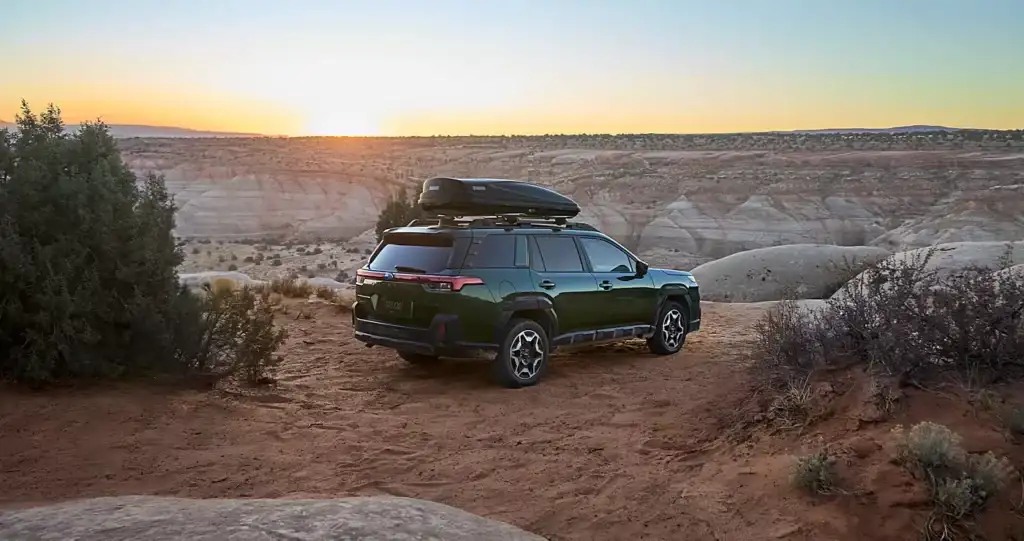
When you’re shopping for a crossover that can handle everything from daily commutes to weekend adventures, two names consistently rise to the top: the 2025 Subaru Outback and the 2025 Honda CR-V. Both vehicles have earned their stripes as reliable, versatile options, but they take different approaches to winning over buyers.
Introduction to the Models
The 2025 Subaru Outback and Honda CR-V represent two distinct philosophies in the crossover world. The Outback positions itself as a rugged wagon that’s ready for adventure, while the CR-V focuses on being a practical, comfortable daily driver. Both vehicles attract families, outdoor enthusiasts, and commuters, but for different reasons.
The Outback appeals to those who want adventure-ready capability without sacrificing comfort. It’s built for people who want to head to the mountains on weekends or need to handle Orlando’s occasional rough weather. The CR-V, meanwhile, draws buyers who prioritize fuel efficiency, interior space, and a smooth ride around town. Each vehicle has found its niche, making this comparison particularly interesting.
Performance and Engine Options
The Outback gives you two engine choices: a standard 182-horsepower, 2.5-liter I-4 or an available 260-horsepower turbocharged 2.4-liter that pumps out 277 lb-ft of torque. Both engines work with a continuously variable automatic transmission (CVT) and come with all-wheel drive (AWD) as standard. The base engine can tow 2,700 pounds, while the turbocharged version pulls up to 3,500 pounds.
The CR-V keeps things simpler with a single 190-horsepower turbocharged 1.5-liter I-4 paired with a CVT. You can get it with front-wheel drive or opt for AWD. Towing capacity maxes out at 1,500 pounds with the right accessories.
The real difference comes down to approach. The Outback’s standard AWD means all four wheels get power constantly, giving you better grip in tricky conditions. The CR-V’s available AWD works well, but it’s not standard. With 8.7 inches of ground clearance (9.5 inches in the Wilderness trim), the Outback handles rough terrain better than the CR-V’s more road-focused setup.
Fuel economy tells another story. The standard Outback gets EPA estimates of 26 mpg city and 33 mpg highway, while the turbocharged version drops to 23 mpg city and 30 mpg highway. The front-wheel-drive CR-V beats both with 28 mpg city and 34 mpg highway.
The CR-V delivers a smooth, comfortable ride with soft suspension that soaks up bumps beautifully. The Outback offers more capability with features such as X-MODE for off-road situations and Snow and Mud modes for challenging conditions.
Interior and Comfort
Both vehicles’ cabins feature thoughtful design but with different priorities. The Outback’s interior uses quality materials without being flashy. Front passengers get good head and shoulder room, while the back seat offers 39.5 inches of legroom, 1.4 inches more than the previous generation.
The base Outback keeps things simple, but higher trims add dual-zone climate control, heated front seats, and a power-adjustable driver’s seat. You can get a heated steering wheel, ventilated front seats, and heated rear seats as you move up the trim levels.
The CR-V rides on a longer wheelbase and has a mostly flat floor, creating a remarkably spacious cabin. Front seats offer good support, and all but the base LX get power adjustment for the driver. Rear passengers get massive legroom at 41 inches, plus reclining split folding seatbacks.
For cargo space, the Outback provides 32.6 cubic feet behind the second row, expanding to 75.6 cubic feet with seats folded. The available hands-free power rear gate makes loading easier, and standard roof rails add versatility for outdoor gear.
The CR-V offers more cargo space with 39.3 cubic feet behind the second row, growing to 76.5 cubic feet with seats down. The tiered cargo floor option creates a flat loading surface. While neither vehicle uses lavish materials, the CR-V shows excellent fit and finish with an imaginative design.
Technology and Infotainment
Technology features separate these vehicles significantly. The Outback comes with wireless Apple CarPlay and Android Auto integration, letting you control navigation and music without plugging in your phone. The available 11.6-inch touch screen provides intuitive control, while the Harman Kardon premium audio system delivers 576 watts through 12 speakers.
The CR-V keeps things more basic with a 7-inch touch screen on LX and EX trims, featuring physical volume and tuning knobs plus Apple CarPlay and Android Auto. The EX-L upgrades to a 9-inch touch screen with wireless connectivity. Audio ranges from a 240-watt, six-speaker system to a 320-watt, eight-speaker setup.
Both vehicles excel in safety technology. The Outback’s EyeSight Driver Assist Technology includes automatic precollision braking, precollision throttle management, and advanced adaptive cruise control with lane centering. The system uses dual cameras near the rearview mirror, with select models adding a third camera for better pedestrian detection.
The CR-V counters with Honda Sensing Suite, featuring collision mitigation braking, road departure mitigation, adaptive cruise control, and lane-keep assist. Both systems provide excellent protection, though the Outback’s EyeSight has earned particular praise for its effectiveness.
Safety Features and Ratings
Safety credentials are strong for both vehicles. The 2025 Outback earned a five-star overall vehicle score from the National Highway Traffic Safety Administration (NHTSA), thanks to its Subaru Global Platform with extensive high-strength steel construction. The CR-V also received five stars overall from NHTSA, though it scored four stars in the front crash and rollover evaluations.
The Insurance Institute for Highway Safety named the CR-V a Top Safety Pick, but it earned a concerning “Poor” rating in the updated moderate overlap front test. The Outback’s reputation for safety in challenging driving conditions gives it an edge, particularly for Orlando drivers who may encounter severe weather.
Pricing and Value
Pricing reveals significant differences. The base Outback starts at $29,000 MSRP, while the top Limited XT reaches $42,060. At Sport Subaru South, we offer attractive financing options, including a 1.9% annual percentage rate on new Outbacks.
The CR-V starts higher at $30,100 MSRP for the LX trim, with the top EX-L reaching $35,000. Cost of ownership over five years favors the CR-V at $39,523 versus $44,552 for the Outback. The CR-V depreciates $13,059 over five years with $2,440 in maintenance costs, while the Outback loses $16,823 in value with $2,744 in maintenance expenses.
Test-Drive the 2025 Subaru Outback in Orlando, Florida, Today
The comparison highlights Outback’s adventure capability, standard AWD, and towing capacity. It’s perfect for outdoor enthusiasts who need versatility. The CR-V excels in fuel economy and lower ownership costs, making it ideal for daily commuting. For Orlando drivers who value adventure readiness and all-weather capability, the Outback stands out. Visit us at Sport Subaru South to test-drive the 2025 Outback and discover which trim fits your lifestyle best.
0 comment(s) so far on 2025 Subaru Outback vs. 2025 Honda CR-V