




How a Subaru Boxer Engine Works
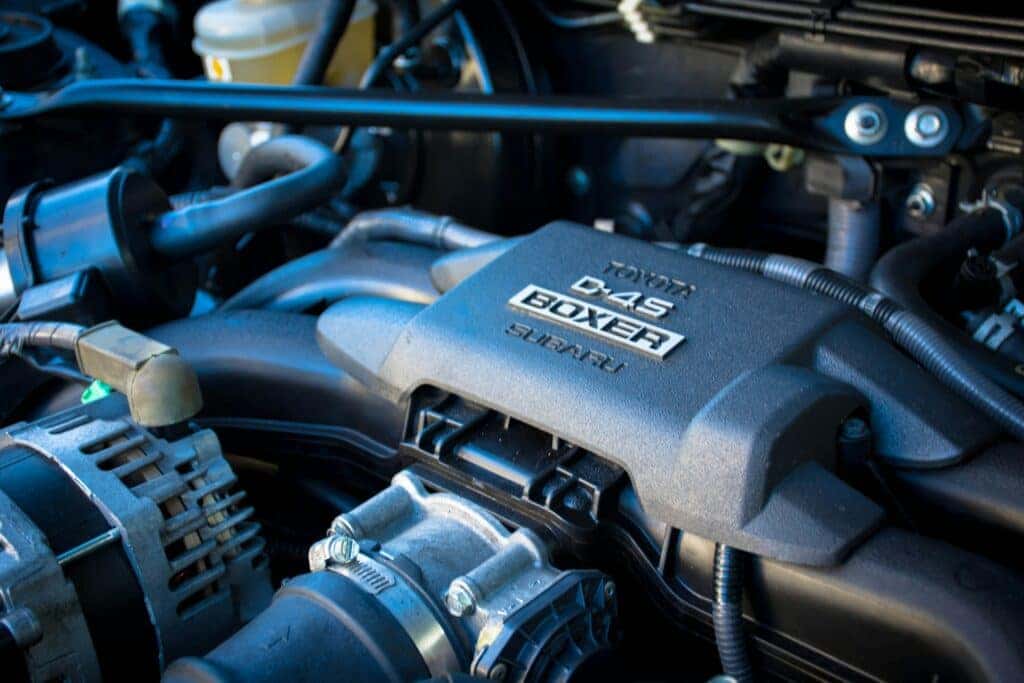
Subaru vehicles share many distinct characteristics, including safety, performance, and reliability. However, the most recognizable feature of any Subaru model is arguably the SUBARU BOXER engine. It’s been an integral part of the Japanese carmaker’s vehicles since 1966 and provides many benefits, including improved comfort and handling. In this article, we explain how a SUBARU BOXER engine works and describe its key advantages over traditional engine architecture.
Anatomy of the SUBARU BOXER Engine
The main element that makes the SUBARU BOXER engine different is the position of its cylinders. They face each other on both sides of the crankshaft and move horizontally toward and away from each other in a similar way to boxers trading punches. This simple architecture allows the engine to connect directly to the car’s transmission, improving efficiency and reducing the number of engine components required to get the power down to the wheels. The SUBARU BOXER engine is also highly versatile and fits various Subaru vehicles, from the performance-oriented Subaru WRX to the family-focused Subaru Forester.
How the SUBARU BOXER Engine Works
A summary of the stages in the running cycle helps to explain how the SUBARU BOXER engine works.
Intake
As with any gas-powered engine, the first phase of the SUBARU BOXER engine’s cycle is the intake stroke. This is when the pistons move away from each other and from the crankshaft in the middle. This creates a vacuum in the combustion chamber, which the intake manifold fills with a mixture of fuel and air through the intake valves.
Compression
Once the combustion chamber gets its intake of air and fuel, the pistons start to move back toward each other. At this point, the exhaust and intake valves shut off, trapping the air-fuel mixture inside. As the fuel and air compress, the resulting pressure increases the temperature in the chamber. This creates the ideal environment for combustion.
Power (Combustion)
After the compression phase is complete, the spark plugs ignite the air-fuel mixture, producing a small explosion. This pushes the pistons away from each other and toward the crankshaft. The burst of power turns the crankshaft, transferring the power down to the wheels and moving the vehicle. The movement of the pistons away from each other also takes them back to the intake phase.
This repeated cycle gives the vehicle the power it needs to keep moving. The advantages of the SUBARU BOXER engine design are apparent at this stage in the running cycle. The movement of the pistons in opposite directions to each other generates less vibration than normal engines. It also allows a lower engine placement, resulting in a lower center of gravity.
Exhaust
The pistons start to move back toward each other after the combustion phase. This pushes the burned gases generated by the explosion out of the cylinders through the exhaust valves. They then reach the exhaust manifold and exit via the exhaust system. The SUBARU BOXER engine’s unique piston orientation also generates a special boxer engine sound, so you can recognize a Subaru simply by its engine noises.
Key Advantages and Innovations of Subaru’s BOXER Engine
The SUBARU BOXER engine offers multiple benefits.
Superior Handling
The Subaru engine layout means the engine can sit lower than a standard engine. The result is a lower center of gravity, which gives Subarus superior stability and handling. This makes performance-oriented models quicker around corners and more fun to drive. Larger models are also easier to drive and control in tight situations.
Better Fuel Efficiency
The SUBARU BOXER engine’s simple design makes it lighter than traditional engines. The positioning of the pistons facing each other also reduces friction, making it more efficient. The excellent fuel efficiency of Subarus is largely due to a combination of this reduced weight and increased efficiency.
Increased Interior Comfort
Since the pistons move horizontally and symmetrically, vibration is minimal. This makes the whole piston motion smoother, providing a more comfortable drive, even at higher speeds.
Enhanced Safety
Subarus are much safer than other vehicles in a frontal collision because the engine’s architecture permits a lower engine placement than a traditional engine. In a car with a traditional engine, a high-speed frontal impact can push the engine into the cabin, potentially causing serious injury to passengers. Because the SUBARU BOXER engine is lower, it’ll drop below the cabin during a frontal collision, significantly improving passenger safety.
Improved Reliability
SUBARU BOXER engines play a key role in the well-known reliability of Subaru vehicles. Their simple and efficient design, lightweight architecture, and reduced friction make them highly durable and reliable. If you follow your Subaru’s maintenance schedule, there’s a good chance it’ll run smoothly and issue-free for a long time.
Better Stability on Rough Surfaces
Subaru’s excellent all-wheel-drive systems are possible because of the SUBARU BOXER engine configuration. This allows the all-wheel-drive drivetrain system to sit right on top of it. It then delivers variable power to all four wheels, greatly improving traction when driving on slippery roads or off-road. This drive system and lower center of gravity provide exceptional stability in difficult driving conditions.
Try Out the SUBARU BOXER Engine at Sport Subaru South
The best way to understand the many SUBARU BOXER engine advantages is to come and test it for yourself. We invite you to take a test-drive at our Sport Subaru South dealership in Orlando, Florida. We’re here to answer all your questions about the Subaru model you’re interested in, providing the information you need to make the right decision. Contact us today to schedule your test-drive.
gray and black Subaru vehicle engine interior by Jayden Wong is licensed with Unsplash License
0 comment(s) so far on How a Subaru Boxer Engine Works